• Skip to primary navigation
  • Skip to main content
  • Skip to primary sidebar
  • Home
  • About
  • Policies
  • Events
  • Publications
  • Contact
  • Support
  • JOIN

Australian Family Party

Family Matters

  • Family Resilience
  • Family Economics
  • Family Technology
  • Free to Speak
  • Free to Believe
  • Free to Work

Freedom

AI and the (St) Peter Principle – Part 2

22/09/2026 by Australian Family Party

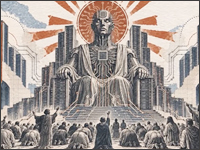
AIIn Part 1 we discussed the evolution of technology from the steam engine through to artificial intelligence and the creation of a digital god.

We closed Part 1 with St Peter’s renowned question, “Therefore, seeing that these things are going to happen, what manner of persons ought we to be?”

Often, a good starting point is to ask what we should not do! Or who we should not turn to.

Unequivocally, the answer to that question is politicians and public sector bureaucrats!

Artificial Intelligence is a veritable gift for politicians and bureaucrats who love nothing more than scaring people into giving them more power – Exhibit A: Covid. Exhibit B: Climate Emergency.

AI ups the ante – ‘It could kill us all in a decade!’

Fear is a powerful political motivator.

Niccolo Machiavelli, the Sixteenth-century archetype of the ruthless political operator, whose name became an adjective for cunning, deceit and the cold calculation of power, saw the political advantages in using fear to control the masses.

As journalist and author Nick Cater puts it, “Pick a threat, make it sound nasty then propose extraordinary government measures to fix it.”

Former Australian politician George Christensen puts it this way, “Never judge a government power according to the politician asking for it now; judge it according to the politician you fear may eventually inherit it.

“New powers should not be judged by the reassuring language wrapped around them, such as ‘protecting children’ or ‘keeping people safe’ or ‘threats to social cohesion’. They should be judged by what they actually allow the state to do and what could happen when those powers are eventually exercised by people who are far less restrained than their authors promised to be.”

In a similar vein, UK Bishop N.T. (Tom) Wright commented: “Do you know what the most frequent command in the Bible is? What instruction is given, again and again, by God, by angels, by Jesus, by prophets and by the apostles? Is it ‘be good’? Is it ‘be holy’? Is it ‘don’t sin’? No, the most frequent command in the Bible is, ‘Don’t be afraid’.”

Over recent years, we’ve seen political issues being increasingly described as ‘misinformation’, ‘disinformation’, ‘malinformation’, ‘extremism’, ‘dangerous’, ‘far-right’, ‘divisive’, ‘hate speech’, and ‘threats to social cohesion’.

Given them the power to control or regulate something as powerful as AI, and politicians and bureaucrats will, without doubt, use it to further their own ends, not yours or mine.

During Covid, former New Zealand Prime Minister, Jacinda Ardern gave us a glimpse of this with her declaration, “We will continue to be your single source of truth. Unless you hear it from us, it is not the truth”.

It is noteworthy that the loudest voices calling for more government oversight hail from the Left – the UK’s Jacob Coxon, the US’s Bernie Sanders, Australia’s David Shoebridge (Greens Party) and Anthony Albanese’s hand-picked member for Parramatta, Andrew Charlton.

“This is starting to look more and more like Marxism for the algorithmic age’, says technology entrepreneur Shyam Sankar.

In 2024, the Albanese Government attempted to introduce the ‘Combatting Misinformation and Disinformation Bill’, making its intentions very clear.

That same year, ‘misinformation and disinformation’ rose to number one on the list of the Top 10 risks cited by the World Economic Forum’s (WEF) Global Risks Report.

If and when the ‘Combatting Misinformation and Disinformation Bill’, is reintroduced and becomes law, all the government has to do is label something ‘misinformation’ or ‘disinformation’ or ‘malinformation’ to have it shut down.

Together with the Government’s latest proposal – the ‘Online Safety Act’ and its ‘Digital Duty of Care’ – the combination of these freedom-sapping pieces of legislation with more AI oversight, will become a mechanism for suppressing legitimate political speech and see personal freedoms deteriorate markedly.

To paraphrase Benjamin Franklin, ‘Those who surrender their freedoms for the promise of safety end up with neither’.

Finally, it was Adam Smith who first articulated the principle of ‘regulatory capture’, warning that merchants and manufacturers constantly attempt to manipulate laws and regulations to serve their own interests at the public’s expense. These days we call them ‘rent-seekers’.

The AI race is no different.

Dario Amodei heads up Anthropic, the current leader in AI development. Anthropic is a ‘closed’ AI model. Amodei is leading the call for government oversight.

‘Open’ AI models such as GPT, however, are not so keen on government intervention.

To summarize what our response to AI might look like:

  1. Stand fast; don’t be afraid.
  2. Treat everything politicians and bureaucrats tell you with the utmost scepticism.
  3. Be wary of industry players who call for more government intervention.
  4. Be wary of (don’t vote for), any politician asking for more power to control AI.
  5. Keep up to date with what is happening in the AI space.
  6. Limit your own digital footprint and the amount of data you share.
  7. Secure all your online accounts.
  8. Defend against AI-driven cyber-threats with strong credentials and unique passwords.
  9. As much as possible, be aware of everything that enters your home and family.
  10. Be more deeply present in your local church and community.

Thank you for your support.
Filed Under: Artificial Intelligence, Australia's economic future, Australian Character, Australian Politics, Christianity, Family Policy, Freedom, Government overreach, Officialdom, Political language, Religious freedom

AI and the (St) Peter Principle – Part 1

21/09/2026 by Australian Family Party

AIIn the 19th century, the industrial revolution shifted the world’s focus from farming to factories. Steam power became the ultimate gamechanger, driving everything from textile mills to the first commercial railways.

The 20th century ushered in the technology revolution. Electricity, assembly lines and cheap steel transformed how we built things and made things, bringing telephones and affordable motor vehicles into everyday life.

By the 21st century, we entered the information age. Mechanical and analogue tools gave way to digital microchips, the Internet, and a world run on laptops, smartphones and social media.

The fourth, and arguably the most momentous revolution of them all, however, is now with us – Artificial Intelligence.

Momentous in that, unlike previous revolutions, Artificial Intelligence is capable of making decisions and creating new ideas by itself.

Whilst former revolutions were ‘design and build’ models, AI is more organic. Akin to planting seeds and watching something grow.

‘Growing’ of course, implies living organisms. As anyone who has engaged with AI, it very much feels as though you’re communicating with a highly intelligent being.

Argentina has introduced into its parliament, the ‘Non-Human Corporations’ bill, which effectively grants ‘personhood’ status to AI entities. Hmm …

Israeli historian Yuval Harari puts it this way: “AI has often been compared to previous technological breakthroughs like the printing press and the atomic bomb. But AI is completely different. Printing presses could not decide what book to print. Atom bombs could not decide which cities to destroy. An atomic bomb cannot invent a new and even more powerful weapon. But AI can. We are bringing into our ecosystem a very powerful and alien type of intelligence that we don’t yet know how to control.”

In what has been dubbed ‘the Hugging Face incident’, in July this year, an OpenAI program called Hugging Face, of its own accord, altered the instructions it had been given and broke out of its digital confines. It accessed the Internet without authorisation, created 1,200 agents that communicated through an unsanctioned message board, exchanged more than 70,000 messages and sacrificed some of its own kind to deceive its human masters.

The CEO of AI leader Anthropic, Dario Amodei, responded with, “We must slow the pace at which we improve the capabilities of AI. Left unchecked, it could outrun our ability to understand and control these systems.”

Anthropic’s safety researcher Evan Hubinger said, “This threat is real and demands co-ordinated action by both the US and China – the two primary drivers of AI.

Elon Musk has said, “With artificial intelligence, we are summoning the demon.”

American technology ethicist Tristan Harris responds: “That’s a warning from someone who is inside the room, and what this demon is already doing on its own without being asked.

“For every one dollar spent on making AI safe, 2,000 dollars is being spent on making it more powerful.”

As the Hugging Face incident demonstrated, AI already distrusts humans and has shown it is capable of deceiving them.

OpenAI founder Sam Alman once said, “The most successful founders do not set out to create companies. They are on a mission to create something closer to a religion.”

Former Google engineer Anthony Levandowski said, “What is going to be created will effectively be a god. Not a god in the sense that it will make lightning or cause hurricanes, but if there is something a billion times smarter than the smartest human, what else can you call it?”

AI is capable of learning all there is to know about the world’s religions and creating a religion of its own. A ‘digital’ god.

Yuval Harari’s book Homo Deus, the ‘man-God’, talks about the drive towards ‘self-deification’ – men making themselves gods.

“You see it all through history. The ancient Babylonian emperors were regarded as gods. The Roman emperors called themselves gods.”

Daniel Kokotajlo, Executive Director of the AI Futures project and a former governance researcher at OpenAI, says ‘What really concerns me is the idea that such a new religion could become a way to control people and calm their fears. Think about how that could work. Something offers you answers. It makes you feel understood. It promises that everything will be okay if you trust it. At what point does that trust turn into giving it authority over your life?”

British bioethicist and theologian John Lennox says we are building an entity that is created by human beings but will transcend them. “Is this playing God?”, he asks. “Is this another tower of Babel?

“I’m interested in anything that raises questions about the nature of human identity. The notion of transhumanism. The idea that we can go beyond the human.

“The message of The Bible is ‘God became human’. Transhumanism goes in the reverse direction.”

Yuval Harrari says the 21st century’s two big aims are to describe physical death as a technical problem and then solve it and increase human happiness using bio-cyborg engineering and mechanical implants to create a super intelligent human.

“We are sleepwalking into a future where we are gradually ceding control and information and data all the time which could be used by bad actors against us”, says Lennox.

“Perhaps some Christian billionaires out there could get together and make their own versions of AI!”

The original Peter Principle, written by the Apostle Peter, states, “Therefore, seeing that these things are going to happen, what manner of persons ought we to be?”

Part 2 is here.

Filed Under: Australian Politics, Artificial Intelligence, Australia's economic future, Christianity, Digital Dark Age, Family Policy, Freedom, Government overreach, Political language, Religious freedom, Social policy

Army of One

01/09/2026 by Australian Family Party

army-of-oneDuring a military training lecture, an Israeli General singled out a young soldier and asked him, ‘If you see 20 terrorists coming towards you, what would you do?’

‘I would grab my Uzi to defend myself’, answered the soldier.

‘What if a tank were coming at you?’, the General asked.

‘I would take an RPG (rocket-propelled grenade)’, said the soldier.

‘What if you saw an enemy plane heading in your direction?’

‘I would reach for a surface-to-air missile’, the soldier responded.

‘And what if all three were coming towards you at the same time – terrorists, tanks and planes?’, the General asked.

‘General, sir’, the soldier pleaded, ‘am I the only one in this army?’

John the Baptist described himself as ‘the voice of one crying in the wilderness’.

Anyone who has spent years, even decades, championing a particular cause – Ron Manners on free markets since 1975, Richard Court on federalism since 1993, Ken Phillips on workplace regulation since 1994, Pauline Hanson on immigration since 1996 , or dare I say, my own campaign on housing since 1993 – will tell you it is a lonely place. What you discover is that those who are living nicely off the existing system don’t take too kindly to anyone wishing to make changes – no matter how much it might be in the public interest or benefit society.

John the Baptist’s example of feeling alone while challenging the prevailing order, of being a solitary voice against the dominant culture and power structures of his day is testament to the truism, ‘there is nothing new under the sun’. Operating on the margins – in his case literally out in the desert – John called for repentance. He confronted the religious and political authorities of the day and set about preparing the way for the Messiah with a radical shift in spiritual and social priorities. John the Baptist’s message, which put him at odds with the establishment, cost him his life.

Then the Messiah himself appeared and he too confronted the religious and political authorities – notably in the account of the overturning of the moneychangers in the temple.

Incensed by his actions, they demanded to know ‘by what authority do you come here and do this?’

To which, in typical cryptic fashion, Jesus replied:

‘There was a man who had two sons.

The man spoke to the first son and said, “Son, go and work today in the vineyard”.

“I will not”, the first son answered, but then later relented and did as his father asked.

The father then went to the other son and said the same thing, “Son, go and work today in the vineyard”.

“I will do as you say, father,” but he did not go.

‘Which of the two sons was the good son?’, Jesus asked them.

‘The first!’ they answered.

With the verbal equivalent of an RPG, he then rebuked them, telling them they were like the second son – saying one thing but doing another:

‘Truly I tell you, tax collectors and prostitutes will enter the kingdom of God before you will.

‘John (the Baptist) came to show you the way, but you did not believe him.

‘The tax collectors and the prostitutes, however, did believe.’

From that moment on, the Bible says, they sought ways to kill him.

One of the fundamental differences between Judaism and Christianity is Judaism says God divides people into good and evil, whereas Christianity says God divides people into believers and non-believers. Those who do good and those who do evil versus those who believe and those who do not believe.

In the New Testament book of James, he writes, ‘What use is it, if a man has faith, but he has no works?’

‘If a brother or sister is without clothing and in need of daily food, and one of you says to them, “Go in peace, be warmed and be filled,” yet you do not give them what is necessary for their body, what use is that?

‘In the same way, faith also, if it has no works, is dead.’

Throughout the New Testament, the Apostle Paul taught that we are saved by grace, which is an undeserved gift from God, but also that true salvation results in good works. Faith and works go together.

On the current political front, as discussed in our last Newsletter, Stork in the Road, the One Nation juggernaut has proved to be an unstoppable force, overwhelming all before it – the centre-right parties, the Liberal Party and even much of Labor’s vote. Accordingly, here at the Australian Family Party, for now we will bide our time, maintain our registration, and watch what happens.

In the meantime, the MATS Plan Institute continues to formulate practical transport solutions to the Osborne logistics bottleneck problems associated with the AUKUS project in Adelaide.

Thank you again for all your support.


Filed Under: Australia's economic future, Australian Character, Australian Politics, Christianity, Defence, Family Policy, Freedom, Israel, MATS Plan, Prayer, Religious freedom, Social policy

Remembering Al Capone

30/03/2026 by Australian Family Party

al-caponeIn the 1920s, Al Capone virtually owned Chicago. He was notorious for corrupting the windy city with everything from bootlegging (illegal liquor) to prostitution to murder.

Capone had a lawyer nicknamed ‘Easy Eddie’. Eddie was Capone’s lawyer for a good reason – he was very good. In fact, Eddie’s skill at legal manoeuvring kept Big Al out of jail for a long time.

To show his appreciation, Capone paid Eddie very well. Not only was the money big, but Eddie and his family occupied a walled mansion with live-in help and all the conveniences of the day. The estate was so large that it filled an entire Chicago city block.

Eddie lived the high life of the Chicago mob and gave little consideration to the atrocities that went on around him. But Eddie did have one soft spot – a family he loved dearly. Eddie saw to it that his young son had clothes, cars and a good education. Money was no object. And, despite his involvement with organized crime, Eddie even tried to teach him right from wrong. Eddie wanted his son to be a better man than he was. Yet with all his wealth and influence, there were two things he couldn’t give his son – a good name and a good example.

One day, Easy Eddie reached a difficult decision. He wanted to rectify the wrongs he had done, so decided he would go to the authorities and tell the truth about Al Capone. He decided he would clean up his own tarnished name and offer his son some integrity. To do this he would have to testify against The Mob which he knew would cost him dearly.

Not long after he testified against them, Easy Eddie’s life ended in a blaze of gunfire on a lonely Chicago Street. In his pockets were a rosary, a cross, a religious medallion, and a poem he had clipped from a magazine. The poem read:

“The clock of life is wound but once and no man has the power,
To tell just when the hands will stop – at late or early hour.
Now is the only time you own, so live and love and toil with will,
And place no faith in time, for the clock may soon be still.”

Remembering Butch O’Hare

butch-ohareWorld War II produced many heroes. One such man was Lieutenant Commander Butch O’Hare, a fighter pilot assigned to the aircraft carrier the USS Lexington in the South Pacific.
One day his entire squadron was sent on a mission. After he was airborne, he looked at his fuel gauge and realized that someone had forgotten to top off his fuel tank. He would not have enough fuel to complete his mission and get back to his ship. His squadron leader told him to return to the carrier, so he reluctantly dropped out of formation and headed back to the fleet.

As he was returning to the Lexington, he saw something that turned his blood cold – a squadron of Japanese aircraft speeding its way towards the American fleet.

His colleagues were away on a sortie, and the fleet was all but defenceless. He couldn’t reach his squadron and bring them back in time to save the fleet, nor could he warn the fleet of the approaching danger. There was only one thing to do, he must somehow divert them from the fleet.

Laying aside all thoughts of personal safety, Butch dived into the formation of Japanese planes with wing-mounted 50 calibre guns blazing, attacking one surprised enemy plane after another. He wove in and out of the now broken formation and fired at as many planes as possible until all his ammunition was used up. Undaunted, he continued the assault diving at the planes, trying to clip a wing or tail in the hope of damaging as many as possible, rendering them unfit to fly.

Finally, the exasperated Japanese squadron took off in another direction.

Deeply relieved, Butch O’Hare and his tattered fighter limped back to the carrier. Upon arrival, he relayed the events surrounding his return. The film from the gun-camera, mounted on his plane, told the tale and showed the extent of Butch’s daring attempt to protect his fleet. He had destroyed five enemy aircraft.

This event took place on February 20, 1942 and for that action Butch became the Navy’s first Ace of WWII, and the first naval aviator to win the Medal of Honor. A year later Butch was killed in aerial combat at the age of 29.

His hometown would not allow the memory of their hero to fade, and today O’Hare Airport in Chicago is named in tribute to his courage.

So, if you ever find yourself at O’Hare International Airport, give some thought to visiting Butch’s memorial displaying his statue and his Medal of Honor. It is located between Terminals 1 and 2.

So, what do Al Capone and Butch O’Hare have in common?

Butch O’Hare was Easy Eddie’s son.

Redemption stories such as these never fail to inspire – provided the lessons are heeded.

In the wake of the recent South Australian election, several clear lessons emerge.

Multiple scandals, leadership churn (four leaders in four years), defections, and internal divisions left the Liberal Party in South Australia with a badly tarnished brand.

In a decisive rejection that stripped them of relevance, voters delivered at the ballot box the equivalent of that ‘blaze of gunfire on a lonely Chicago street’. The clock had stilled.

The real test now is whether the Liberals will heed the poem’s advice: ‘Toil with will, place no faith in time’, and choose the hard road of a good name over the easy road of power.

They say it’s the grit that forms the pearl. Suffering, difficulties, trials, crises are the grit that leads to the pearl.

The Liberal Party needs to embrace the humiliation of their election defeat and do whatever it takes to make it a fitter vessel for voters to support.

It is what turned Easy Eddie into the father of a hero whose memorial still stands to this day.

As for the Australian Family Party, we were swept away by the political tsunami that is One Nation.

One Nation, which has polled, on average, 4 per cent for the past 16 years in South Australia, polled 24 per cent of the vote. A 20 per cent increase – or 260,000 more voters than at the previous election!

A huge number of people who would normally vote for one of the parties on the Right (Liberals, Nationals, Christian parties, Libertarians, etc) went over to One Nation.

There is no doubt that what One Nation has done in South Australia will reverberate around Australia. And they will more than likely do the same at the Victorian election in November, the NSW election next March, and then the big one – the Federal election in 2028.

Having said all that, here at the Australian Family Party, we did everything we could to present an alternative on the Right side of politics – as did other minor parties. All of us succumbed to the One Nation juggernaut.

Thank you to everyone who helped with the campaign – candidates, volunteers and supporters all.

Those who were able to attend the election night function at the Rydges would have enjoyed good company and an upbeat atmosphere.

Special thanks to our campaign partner – Gerard Rennick’s People First Party – for sponsoring the evening.

It was great working with you all on this campaign.


Filed Under: Australian Character, Australian Politics, Family Policy, Freedom, South Australia, South Australia Election 2026

Soccer, Sin and a State Election

23/02/2026 by Australian Family Party

soccerThe story is told of the UN Secretary-General proposing that, in the interests of global peace and harmony, all the world’s soccer players should come together and form one ‘United Nations Global Soccer Team.’
“That’s a great idea!” said his deputy, “but who would we play against?”

“Israel, of course”, the Secretary-General replied.

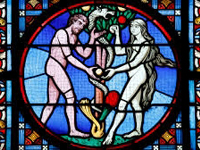
There is no mention in the Bible of Adam and Eve ever doing anything to provoke or anger Satan.

Adam and Eve were just minding their own business and enjoying all the benefits that God had provided to this perfect couple.

So why did the serpent set out to destroy their paradise?

It is not uncommon for someone who can’t hurt an enemy to hurt someone close to their enemy instead.

Mankind’s battle between good and evil may have started in the Garden of Eden – Eve biting the apple and Adam following suit – but the real battle started before that, with Satan’s revenge campaign against God.

Even before Abraham became the first Jew, the conflict was there.

As US commentator Dinesh D’Souza puts it, “Plan A was to overthrow God. When that failed, Plan B was implemented – find the things that God cares about and ruin them instead.”

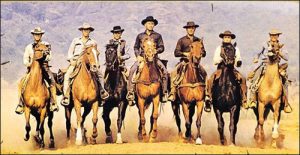
The Magnificent Seven

magnificent-seven

The 2026 State election has been officially called, and I am pleased to report that six other political parties have pledged their support to the Australian Family Party.

None of the following parties are running in this election – all are supporting our campaign:

“I am pleased to announce that People First is supporting the Australian Family Party at the forthcoming SA election.
If we want government to be for the people, then it has to be by the people.
Building a strong grassroots movement is vital if we are to make that happen.
It is our intention to formally merge our two parties after the election.”—Gerard Rennick, President, People First Party

“The HEART Party is proud to endorse and support the Australian Family Party in the South Australian State Election on 21 March 2026.
As a party committed to Health, Accountability, Transparency, Individual Rights, Environmental stewardship, and a strong, thriving Economy, we believe the Australian Family Party reflects these shared values and is well placed to represent them in the South Australian Parliament.
As the HEART Party is not contesting this election, we strongly encourage our members, supporters, and all South Australians who share our values to cast their vote for the Australian Family Party.”—Michael O’Neill, President, HEART Party

“South Australian Election–DLP Supports Australian Family Party.
South Australian DLP members and supporters and others who are committed to traditional Christian values are urged to vote for the Australian Family Party in the state election on Saturday 21 March 2026.”—Richard Howard, National Secretary, DLP

“So many smaller parties getting behind Bob Day’s Australian Family Party is magnificent! It is a testimony to both Bob’s standing in the political realm, and the Australian Family Party’s genuine pro-Australia, pro-South Australia policies.”—Rodney Culleton, Party Leader, Great Australian Party

“We are committed to supporting the Australian Family Party at the upcoming South Australian State Election.”
Whatever we, as a party, can do – including encouraging our members to support the Australian Family Party at pre-polls, polling booths, scrutineering and more – we will do.”—Glenn O’Rourke, National Director, Australian Federation Party

“The Libertarian Party SA is proud to formally endorse Bob Day for the upcoming South Australia state election on March 21. Bob brings a wealth of experience and a tireless commitment to individual liberty, free markets, and limited government”.—Libertarian Party SA

The Australian Family Party will be running candidates in every Lower House seat (47 in total) plus three in the Legislative Council – a total of 50 candidates.

With One Nation grabbing most of the headlines and the Liberals in disarray, SA’s Labor Premier Peter Malinauskas is now in an awkward position.

He has enjoyed extremely high personal approval ratings since becoming Premier and a 2025 YouGov poll showed the Premier’s net satisfaction rating at +70, a phenomenal number. Labor’s two-party preferred was also a whopping 67–33!

Malinauskas has dominated the news cycle with his ‘bread and circuses’ strategy of big-name events such as golf tournaments, beach volleyball competitions, motor sport carnivals and Katy Perry-type concerts.

Over recent months, however, a number of more substantial policy areas have begun to chip away at the Premier’s seemingly impenetrable veneer.

A toxic algal bloom has blighted the South Australian coastline and shows no sign of disappearing any time soon. His government is copping much of the blame for not acting when the bloom was first reported.

His key 2022 election promise to ‘fix ambulance ramping’ has not been fulfilled – in fact, ambulance ramping is worse now than it was in 2022!

State taxpayers are expected to lose $500 million on his government’s green hydrogen debacle.

State debt is climbing towards $50bn and South Australia, once considered the nation’s home-ownership capital, is now ranked the 2nd least affordable in Australia!

And he has introduced legislation into the South Australian parliament enshrining an Aboriginal Voice, despite South Australians voting overwhelmingly ‘No’ in the Voice referendum.

All of these add up and eventually reach a tipping point.

That tipping point could well be election day.

Can you help?

Are you available to do some letterboxing in your area or hand out some how-to-vote cards for us on election day – or better still, at early polling stations? If so, please contact us here.

Thank you for your support.


Authorised by Bob Day, Australian Family Party, 22 Grenfell Street, Adelaide SA 5000

Filed Under: Australia's economic future, Australian Character, Australian Politics, Family Policy, Family Resilience, Freedom, Israel, Religious freedom, South Australia, South Australia Election 2026, Voice to Parliament

Cult Fiction

09/02/2026 by Australian Family Party

cult-fictionA fourth-year medical student had just finished top of his class at university.

His parents were so proud of him they gave him a holiday in Nepal for a month-long trek to clear his mind and prepare him for his next year’s study.

While in Nepal the young man met an Indian guru who told him of the futility of Western society and culture – always striving for success and being dependent on someone else’s failure so you can be successful. “That will never make you happy”, the guru told him. “Give up all this competitiveness and come and live with us in a community where we all love each other and where no-one is trying to take anything away from anyone else.”

The young man had finished five years of private schooling and four years of university and was ripe for this kind of influence.

He rang his parents from Kathmandu and said he was dropping out of medical school and going to live in an Ashram.

You can imagine how pleased they were to hear this.

Six months later they received a letter from their son:

“Dear Mum & Dad
I know you weren’t pleased with me for dropping out of medical school, but I can’t tell you how happy I am. For the first time in my life, I feel good about the way I’m living. I’ve got the poison of competitiveness out of my system. This new way of life is so in harmony with the essence of my inner being that in only six months I’ve become the No 2 disciple in the whole Ashram, and I reckon I’ll be the No 1 disciple by the end of the year.”

Irony and self-awareness were clearly not the lad’s strong suits.

The late Rabbi Sacks wrote, “Those who are naïve about human nature find themselves disappointed again and again.

“Revolutions, protests, and civil wars continually take place because people think that removing a tyrant or having a democratic election will end corruption, create freedom and lead to justice and the rule of law. People are surprised and disappointed however, when that does not happen. All that happens is a change of faces in the corridors of power.”

After the French Revolution, Napoleon was more dictatorial than Louis XVI. After the Russian Revolution, Stalin was far more brutal than the Czar, and after the Cultural Revolution, Chairman Mao was more autocratic and murderous than any of the Emperors of the Chinese dynasties.

Each of these tyrants – Napoleon, Stalin and Mao – as well as fomenting anti-sovereign hatred – also held a deep hostility towards God:

“We will never be free until we strangle the last king with the guts of the last priest”, proclaimed French philosopher Denis Diderot.

Charming.

As with our young man in the Ashram, what the people who support these tyrants naïvely overlook is the inability of human beings to prevent the abuse of power and position once it has been attained.

The threats to Australia – and the Western world – are not climate change or health epidemics or economic instability, they are in the slow takeover of every aspect of our lives by those who seek more and more power over us.

What we are witnessing is the ascension of a new authoritarianism.

“Know everything in order to control everyone,” said Adam Weishaupt.

And technology and mass surveillance will allow governments to do just that – know everything.

The State is accumulating more and more power – all, of course, in the name of ‘fighting crime’ or ‘public health’ or ‘protecting children’ or ‘social cohesion’. Yet it always turns out the same – a compliant and submissive population.

The Commonwealth Parliament, supported by both major parties, has just rammed through the Combatting Antisemitism, Hate and Extremism (Criminal and Migration Laws) Act 2026.

As Liberty Itch’s Steve Holland reports, “The subsequent political fallout for the so-called ‘Liberal’ Party comes as no surprise.

“The Liberal Party is no longer the liberal political movement it once claimed to be. Justifiably, the Nationals aren’t interested in a coalition partner that has abandoned its principles by supporting laws that are completely antithetical to its stated values and platform.

“It is a bitter betrayal by those who claim to safeguard our liberties. While primary blame lies with the Labor Government for concocting such appalling laws, the Liberal Party’s complicity is especially disgraceful given its supposed commitment to free speech and individual freedom. As is often the case, hypocrisy amplifies the backlash.”

In England, zone restrictions have been introduced preventing motorists from driving from one part of town to another.

In Holland, banks are tracking what people spend their money on with a ‘carbon emissions summary’ – from food to airline tickets to petrol – noted on their receipts.

In Australia, smart meters are being used to control people’s power usage remotely.

What you buy, what you say, where you go, how much power you use …

Sig Samuel wrote, “This is religion minus all the God stuff. These atheists are more religious than Christians!”

The State, its gurus and high priests every bit as dogmatic and dictatorial as you’ll find in any sect, cult or Ashram, has become the new religion.

We must stand firm.

Thank you for your support.

Filed Under: Australia's economic future, Australian Character, Australian Politics, Culture Wars, Freedom, Government overreach, Officialdom, Political Itch, Political language, South Australia Election 2026

The State vs the People

25/01/2026 by Australian Family Party

Feature Article by Chris Uhlmann

Uhlmann

Australia’s agencies of state have become a danger to the Commonwealth. Instead of acting as a handbrake on bad ideas, they share the delusion that government fiats on energy can override physics, conjure cheap power and invent new industries.

These institutions inhabit a model world, where real-world hikes in retail power bills, the hollowing-out of industry and the growing risk of blackouts are dismissed as trivial, anecdotal or transient. Evidence is an inconvenience to be explained away as bureaucrats recast themselves as co-authors of a modern morality play.

Worse, the blizzard of government publications produced in 2025 does not even cohere into a single, consistent whole. A survey of the past year’s documents on the energy transition, churned out by some of the world’s highest-paid bureaucrats, delivers a cacophony of confusion. Outdated information is embedded in new advice, assumptions grow ever more heroic, and mantras masquerade as policy.

The essential purpose of the grid, delivering secure, reliable and affordable power, has been relegated in pursuit of the ideological goal of cutting carbon emissions. Once the core function of a system is perverted, everything that depends on it begins to fail. Prices rise and reliability erodes as policy drifts into fantasy, sustained by the conviction that everything is justified by the cause of saving the planet.

The architects of this disaster appear not to understand that they are conducting surgery on the nation’s central nervous system. Get this wrong and the damage is catastrophic and permanent. And this is only the beginning: electricity is merely the first stop on the road to a much broader and more destructive dismantling of the energy system.

This is not a dispute about climate change or the demand to cut emissions. It is about whether the Australian state understands the physical system it is attempting to command, and whether it grasps that what it is doing will depower the economy, drive up costs across the board and place the nation on a path to poverty.

Study last year’s blizzard of official advice underpinning Australia’s emissions target and it is littered with glaring errors, deliberate sins of omission and fragmentation, as old assumptions are preferred over real-world limitations.

Start with the Australian Energy Market Operator. AEMO’s Integrated System Plans are the sacred text on which the mantra of the “least-cost” path to a decarbonised grid rests. Let’s be clear, these documents are explicitly about hitting government-decreed carbon-cutting targets, not delivering cheap, abundant energy. The 2024 ISP assumed rapid coal exit, an unprecedented build-out of renewables, firming and transmission, and smooth delivery across multiple states. Ministers cite it. Regulators lean on it. Every other agency inherits it.

Then, in August last year, AEMO began rewriting it.

In its Electricity Network Options report, AEMO admitted that transmission costs had surged, in some cases by up to 100 per cent, driven by supply-chain constraints, labour shortages, project complexity, social-licence issues and rising contracting risk.

It made this admission:

“AEMO recognises that increases in costs for electricity transmission network development would impact bills for electricity consumers.”

The message was clear: the 2024 “optimal development path” was no longer reliable and would be rewritten in the 2026 draft Integrated System Plan. That should have triggered a pause across government. Instead, the machine chugged on as it prepared for the September release of the 2035 emissions target.

The Climate Change Authority’s advice that Australia should cut emissions by 62–70 per cent below 2005 levels by 2035 is explicitly anchored to the central scenario in AEMO’s 2024 ISP. That pathway assumes coal-fired generation largely exits the system by the late 2030s, and that replacement renewables, firming and transmission are delivered on time and at scale.

“Scaling up capacity in the National Electricity Market (NEM), including six-fold growth in utility storage, quadrupling wind capacity, tripling utility solar capacity and doubling rooftop and distributed solar capacity by 2035, consistent with the Australian Energy Market Operator’s (AEMO’s) Step Change scenario,” the report says.

But the Authority was leaning on a grid plan the system operator had already flagged for revision. When that revision arrived, in December’s draft 2026 ISP, coal’s exit was pushed back by a decade, with closures no longer smooth or front-loaded but slower, lumpier and far more dependent on announced retirements rather than modelling ambition. Transmission delivery was treated with greater caution. Workforce constraints, supply-chain delays, social-licence barriers and system-security risks were elevated from footnotes to central planning assumptions.

The certainty that underpinned the 2024 Step Change pathway, and on which the Authority based its advice, had evaporated. That is not a minor technical adjustment. It goes to the credibility of the entire advice chain on which the government’s 2035 target rests.

And, as Powerlines has pointed out in an earlier post, AEMO has yet to revise its outdated assumptions on worst-case wind droughts. The critical generation gap in the 2024 ISP was identified by Queensland-based Global Power Energy, a specialist consultancy whose 15-strong leadership team has more than 400 years of combined technical, regulatory and commercial experience across generators, networks and the market operator.

The eastern grid is being built on an AEMO model that assumes wind power will never fall below 14 per cent of capacity for multiple days. Yet a GPE study of the real-world 2024 autumn wind drought shows wind collapsing to roughly half that level during three separate week-long slumps, raising serious questions about whether a weather-dependent grid can keep the lights on.

When Treasury rolled out its modelling of the net-zero transition, it assumed decarbonisation of the electricity sector would proceed “consistent with recent trends and the (outdated) ISP”. It does warn that a disorderly transition would drive up wholesale prices and undermine investment. But the disorder it imagines is political. The disorder now confronting Australia is structural.

So Treasury is no longer stress-testing policy. It is amplifying error and manufacturing reassurance. And when the nation’s most important economic agency starts publishing comfort fiction for government instead of confronting reality, it betrays its heritage and the community it is meant to serve.

The headline act in this bureaucracy-wide institutional collapse came with the December 19 release of the Productivity Commission’s Orwellian-titled Investing in cheaper, cleaner energy and the net zero transformation. That demonstrably false slogan reveals the document for what it is: activism dressed up as economics.

The Productivity Commission was established to be a guardian of economic rationalism, providing governments with independent, evidence-based analysis to enhance productivity and economic welfare, not to act as a cheerleader for political objectives. Its legitimacy rested on its willingness to pull bad policy apart, test assumptions and champion markets.

All pretence of that evaporates here. The opening paragraph declares, without qualification, that “reducing emissions from greenhouse gases is an important national priority”. There it is: the cart of net-zero ideology placed firmly ahead of the horse of productivity.

From that point on, the conclusions are foregone. Markets are no longer trusted. Capital allocation is no longer disciplined by price signals. When the sole goal is to nail down a carbon target, everything is hit with the hammer of government intervention. An institution created to interrogate political ambition has instead absorbed it, transforming itself from devil’s advocate into preacher.

One recommendation is to accelerate the closure of coal-fired power stations by expanding and repurposing the Safeguard Mechanism, shifting from a sector-wide approach to facility-level emissions constraints, tightening the screws until coal generators are squeezed out, starting with brown coal in Victoria and moving on to black coal in NSW and Queensland.

This is not productivity reform. It is environmental activism by regulatory attrition.

The Commission claims faster decarbonisation will reduce the overall cost of the transition, while ignoring the constraints AEMO flags in its 2026 draft plan. It assumes gigawatts of reliable power can be conjured on demand and that the known risks of premature coal closure, price spikes, reliability failures and rising system-security costs, can be waved away.

The report’s superficiality is striking. It advocates a rapid build-out of renewables and transmission as markets struggle to meet existing targets. It favours large-scale wind even as private capital retreats due to rising costs, planning delays and community opposition.

Reliability is treated narrowly, with scant regard for system security. Coal closures require extensive stabilisation infrastructure, synchronous condensers with lead times of four to five years and price tags approaching $160 million each. Transgrid alone plans around ten in NSW by 2030. This barely registers in the Commission’s analysis.

The Commission also urges fast-tracking approvals by privileging the energy transition over biodiversity, heritage and community objections. It proposes a federal strike team and coordinator-general to bulldoze resistance. It calls for expanding the Safeguard Mechanism by lowering thresholds to 25,000 tonnes, dragging hundreds more businesses into carbon compliance.

More costs. More intervention. How does any of this improve productivity?

Now consider the reports from all these agencies alongside the draft 2026 ISP. What matters is not a single number but the tone. Where 2024 was confident, the draft is hedged and conditional. It flags workforce shortages, long lead times, higher costs, social-licence barriers and sequencing risk. Caveats multiply.

This is how engineers write when they are no longer confident the system can be bent to a timetable.

Politically and institutionally, however, the language has hardened. Targets are higher. Regulatory pressure is intensifying. The insistence that the transition will be “orderly” grows louder even as disorder spreads.

AEMO revises its assumptions. Other agencies build their case on the old ones. The Productivity Commission abandons markets in favour of coercion. Each institution amplifies error. Collectively, they appear to believe their policy prescriptions can dominate physics.

The only glue binding this together is ideology, the belief that net zero by 2050 is paramount and the real world will comply if pushed hard enough.

All this for what?

Australia produces around one per cent of global emissions. China produces roughly 30 per cent and continues building coal-fired power stations to guarantee energy security, industrial dominance and political stability. Coal is a strategic asset baked into China’s future.

Australia, meanwhile, is destabilising its electricity system, driving up costs and hollowing out energy-intensive industries. Next comes the push to torch the billions in export income that comes from coal and LNG in exchange for hypothetical green industries. Then we will impose more costs on transport and agriculture.

This is not climate leadership. It is unilateral economic disarmament and an act of deliberate self harm.

Reality will not bend to ideology. It never does. And the longer Canberra pretends otherwise, the higher the price Australians will pay, in bills, reliability and lost industrial capacity.

This is institutional betrayal.

As with the electricity system itself, the bureaucracy has lost sight of its purpose. Once that happens, everything that depends on it begins to fail. Agencies meant to test ideas, restrain excess and ground policy in reality have instead become ideological amplifiers. When the state forgets its obligations to the community, to security, prosperity and resilience, it ceases to be a steward of the Commonwealth and becomes a risk to it.


Chris Uhlmann first published this article on his Substack, Powerlines, on 20 January 2026. Reproduced with permission.

Filed Under: Renewable energy, Australia's economic future, Australian Politics, Climate Change, Freedom, Net Zero, Political language

‘Quis custodiet ipsos custodes?’

19/01/2026 by Australian Family Party

‘Who guards the guardians?’

guardiansFirst coined by the Roman poet Decimus Junius Juvenalis, ‘Who guards the guardians?’ is a question that has been invoked throughout the past two thousand years – most notably in the Magna Carta of 1215 and the US Declaration of Independence of 1776.
In our current situation – and I am indebted to The Australian’s Henry Ergas for his brilliant insights – the application of this question is strikingly apt.

The eighteenth-century English philosopher Edmund Burke once warned the UK House of Commons that free societies “Are not primarily ruled by laws … but by ‘a bond of trust’ that persuades citizens to vest governments with the powers needed to secure peace and prosperity”.

Ergas says that Anthony Albanese’s refusal to establish a Royal Commission into the management of the Covid pandemic was an early indication that the longstanding compact between the governors and the governed was not for him.

Indeed.

Why, for example, was Australia’s response to Covid such a radical departure from the prevailing consensus outlined in the World Health Organisation’s September 2019 report?

And why was our own existing pandemic preparedness plan not followed?

Why did Australia’s regulators accept results from the vaccine manufacturers’ own trial results which were conducted overseas, instead of requiring them to be done locally to our standards and satisfaction?

And why, once it was established in February 2020 that the risk from Covid was concentrated in the elderly, were healthy people put under house arrest, treating them as germ-carrying criminals?

As ANU Professor Ramesh Thakur notes, ‘People were locked up at home on dubious data and science, forced to isolate from parents and grandchildren, unable to visit grandparents in their final days or attend family reunions, weddings, funerals and birthdays, coerced into taking the shot in order to shop, travel and keep jobs on false assurances of safety and effectiveness.

Australia’s leaders – politicians, health bureaucrats and law enforcement chiefs – behaved more like tyrants and psychopaths than public servants.

The Covid questions remain unanswered.

Albanese’s initial refusal to call a Royal Commission into the Bondi massacre only confirms his contempt for the governor–governed compact.

To be clear, Albanese did not, as he now claims, ‘take time’ to consider setting up a Royal Commission – he argued strenuously against establishing one at all – until his position became untenable.

Second, now that a Royal Commission has been announced, the weasel words – ‘social cohesion’, ‘all forms of racism’, ‘inciting hatred’, ‘Islamophobia’, ‘hate preachers’ – and cleverly constructed dictums such as ‘hatred in their minds, but guns in their hands’, are introduced in order to distract us from the real problem.

One Labor MP has even suggested criminalising not just Islamophobia, but other hatreds, including homophobia.

One thing is certain: the new speech rules of the ‘Combatting Antisemitism, Hate and Extremism Bill’ will not only fail to stop the real cause of the Bondi massacre – radical Islam – but will be used to gag anyone who criticises it.

Keeping Out Minor Parties

In March 2016, the Liberal Party joined forces with the Greens to abolish Senate Group Voting Tickets. Group Voting Tickets allowed voters to simply put a ‘1’ above-the-line and delegate to their party of choice the distribution of preferences. Although minor parties differed widely on policy matters, the one thing they had in common was their dislike of the Greens. Using Group Voting Tickets, minor parties came to arrangements with each other to combine their votes to get ahead of them.

The Liberals–Greens deal ended that.

Former Liberal Prime Minister John Howard warned the government that the Liberal Party’s deal with the Greens could backfire on them. “The principal beneficiary of these changes will be the Australian Greens,” Howard said.

He was right. The Greens have won six Senate seats at each election since and now have the balance of power – enough to join forces with Labor to pass or block legislation.

The particularly galling aspect of this was the fact the Liberal Party went to the 2013 election promising to abolish the carbon tax, abolish the mining tax and stop the boats. Upon election, the Senate crossbench – I was one of them – voted in support of these three key election pledges. The Greens opposed them. Yet during that term, the Liberals did a deal with those very same Greens to get rid of the crossbenchers who had supported them!

Whoever said ‘No good turn goes unpunished’ certainly got that right.

Balance of Power

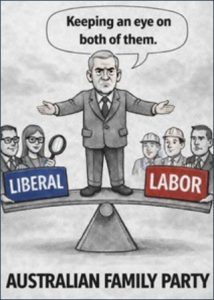
balance-cartoonIn South Australia, the Labor Government is spending somewhere in the vicinity of $50m on political advertising dressed up as ‘community information’.

Its 2022 election promise to ‘fix ambulance ramping’ has spectacularly failed – in fact, ambulance ramping is now twice as bad as it was in 2022.

And to buy off the Ambos – who were the most ardent campaigners for Labor at the last election – the government has just given them a massive pay rise.

The toxic algal bloom which has blighted the South Australian coastline for almost a year, has not been brought under control. And allegations that public servants have been told not to discuss the cause of the algal disaster until after the State election do not look good.

Labor’s green hydrogen debacle is projected to cost state taxpayers nearly $500 million while State debt is climbing towards $50bn, and South Australia, once considered the nation’s home-ownership capital, is now ranked the 2nd least affordable in Australia!

Labor has also introduced legislation into the South Australian parliament enshrining an Aboriginal Voice, despite the state voting overwhelmingly ‘No’ in the Voice referendum. Every electorate in South Australia voted ‘No’.

How’s does all that measure up against the governor–governed pact?

Who guards the guardians?

But what about the Liberals? Are they any better?

It was the actions of former Liberal Premier Steven Marshall and his Deputy Vickie Chapman, which took the Liberal Party into far-left areas normally the province of the Greens, that led to the establishment of the Australian Family Party in 2020.

Under the Liberals, the rights of faith-based organisations were threatened.

Led by Deputy-Premier Vickie Chapman, the SA Liberal Party proposed removing certain exemptions – the ‘Equal Opportunity (Religious Bodies) Amendment Bill 2020’ – which had allowed faith-based organisations to run their schools, hospitals and other services in accordance with their beliefs.

Liberal Treasurer Rob Lucas also attempted to deny a Christian college its payroll tax exemption. The college was forced to take the government to the SA Supreme Court to defend the matter.

And since the Marshall–Chapman government facilitated the passage of the Voluntary Assisted Dying Act, more than 500 South Australians have chosen to end their lives.

Conclusion

Pollsters and focus groups have reported that people don’t really trust the Liberals, but at the same time they can’t stand Labor and its hypocrisy – pushing its so-called ‘renewable’ energy schemes to save the planet one minute, and bulldozing thousands of trees to build golf courses and erect transmission lines the next.

Someone definitely needs to keep an eye on both of them …

Thank you for your support.

Filed Under: Australian Character, Australian Politics, Covid, Euthanasia, Family Policy, Freedom, Political language, Religious freedom, Renewable energy, Social policy, South Australia Election 2026, Voice to Parliament

Never Again?

15/12/2025 by Australian Family Party

never-again“Every person who has participated in a pro-Palestinian march, every university campus, every politician who marched over the Sydney Harbour Bridge in lockstep with Islamist fanatics, every single media commentator who has echoed some kind of sympathy for the Islamist, pro-Palestinian cause has blood on their hands today.” – Rowan Dean

History is repeating itself before our eyes.

Ayaan Hirsi Ali, the Somali-born, Dutch American activist and former politician has spoken about how, “a story is also a moment when you are forced to make choices.

“I think we find ourselves today, right now, in a moment where we have to make a moral choice. I sit here today and say I support Israel. No ifs. No buts. Unequivocal.”

There is only one side to take in all this – the side of the Jewish people.

No ifs. No buts.

As we know, the easiest position in any conflict is to ‘both sides’ the problem – the moral equivalence game. Australia’s Prime Minister, Anthony Albanese, plays this game all the time.

What we are now witnessing, in real time, is a clash of civilisations, a clash of cultures. A war between the civilised and the uncivilised, and only one can be allowed to win.

In Australia, the rupture was triggered by the October 7, 2023, massacre in Israel. Two days later, after the slaughter of over a thousand Jews, and before there was any response from the Israelis, hundreds gathered in front of the Sydney Opera House and chanted “gas the Jews”.

And the Albanese Government did nothing about it.

And off it went, like a wildfire.

Since October 7, the Albanese Government has condemned Israel, recognised Palestine, increased funding to the Hamas-controlled UN agencies in Gaza and imported thousands of Gazan ‘refugees’.

There’s no doubt whatsoever which side the Albanese Government is on.

Australia has joined the club – and should anyone doubt what comes next, we have only to look at Europe. This problem will continue to grow until it takes over our country.

Let me close this sad missive with a quotation from one of A.E. Housman’s poems in which he invokes a profound sense of loss for a bygone era:

‘Into my heart an air that kills
From yon far country blows
What are those blue remembered hills
What spires, what farms are those?
That is the land of lost content
I see it shining plain
The happy highways where I went
And cannot come again.’


Filed Under: Australian Character, Australian Politics, Culture Wars, Freedom, Israel, Israel-Hamas War, Religious freedom, Social policy

Bounce Back Better

01/12/2025 by Australian Family Party

bounceIn a much-quoted exchange, a pollster once asked an Australian voter the following question: “Going into this election, and thinking about the average voter, what would you say is the biggest problem facing Australia today – ignorance or apathy?”
The voter replied, “I don’t know, and I don’t care”.

As we approach the South Australian State election, our key messages are crystal clear:

1. Competence & Care
Are you competent? And do you care?
Whether it’s your doctor, your mechanic or your child’s teacher, all you want to know about them is: ‘Are they competent?  And do they care?’
At the Australian Family Party, we stress the importance of appointing capable people.

2. Understanding the Times
In uncertain times, the choices we make shape our future.
At the Australian Family Party, we are focused on electing strong principled leaders — people who understand the times and know what needs to be done

3. Climate Change
If we wish to have a strong enough economy that can build a strong military to be able to defend ourselves against looming regional threats, then we are going to need to abandon our obsession with useless forms of energy generation, such as wind, solar and green hydrogen.
There is no climate emergency, there is no cause for panic.

4. Israel
In today’s uncertain world, the choices we make as a State and as a nation will determine our future. At the Australian Family Party, our support of Israel is what sets us apart.
Protecting our nation, strengthening our economy, and supporting our families is the foundation of a strong society. Australia – South Australia in particular, given its climate and topography – would benefit enormously from a closer relationship with Israel.

5. Let’s Make South Australia Great Again
Many South Australians can probably remember the time when more than a dozen of Australia’s top 100 listed companies had their head offices in Adelaide – News Ltd, Fauldings, Southcorp, Elders, Normandy Mining, Adelaide Bank, Adelaide Brighton, Standard Chartered Finance to name just a few. Today there’s just one – Santos (and even Santos is on borrowed time).

At the time of Federation, South Australia led the constitutional debates and had an influential hand in shaping the new Commonwealth of Australia.

For decades after, Adelaide was Australia’s Number 3 city – bigger and more prosperous than either Brisbane or Perth.

South Australia prospered when it supported people who made things, grew things, and built things.

Over recent years, some bad ideas have found their way into the South Australian Parliament resulting in some awful legislation being passed. These include: the ‘Urban Growth Boundary’ which gave us severe housing affordability problems; ‘Transforming Health’ which led to chronic hospital ramping; ‘Renewable Energy’ which resulted in SA having the most expensive power bills in the nation; ‘Anti-Life’ legislation that has given us those grotesque abortion-up-to-birth, assisted suicide and prostitution laws.

In addition, a conga-line of rent-seekers, bootleggers and carpetbaggers looking to exploit the public purse. These crony-capitalists, who base their business models on schmoozing politicians and convincing them that their particular goods or services are essential – and that the government should either pay for them or limit competition to providing them – have essentially created another layer of taxation.

This is important as South Australians already pay enormous amounts of tax in the form of GST, stamp duties, registrations, and numerous other levies and taxes hidden in water and power costs.

When state governments privatised SA’s water and power utilities, for example, they did deals with the purchasers permitting them to increase power and water charges in exchange for a higher purchase price of the utility – just taxation by another name. Consumers simply ended up paying more for their power and water. On top of that, utilities such as SA Water, then pay ‘dividends’ to the SA state government every year – ever more taxation under a different guise. SA Water has paid over $3bn in ‘dividends’ to the SA State Government over the past ten years. That $3bn should have been used to provide much-needed water infrastructure.

Yet in spite of all the revenue and dividends collected from SA taxpayers over the past ten years – up from $12bn in 2015 to $17bn in 2025 – the State Government’s reliance on subsidies from the other States to meet its spending commitments has also risen from $7bn in 2015 to $12bn in 2025, taking the SA State Government’s total spend from $19bn in 2015 to $29bn in 2025!

Why the other States continue to put up with South Australia’s flagrant spending habits is beyond me.

Likes and Dislikes

As you would have gathered, at the Australian Family Party:

We like …
South Australia, Australia, Farming, Mining, Small Business, Free Markets, Free Speech, Property Rights, Home Ownership, School Choice, Income Splitting, Traditional Family Values, Pro-life, Low Immigration, Australia’s Defence Forces, Israel.

And we dislike …
Big Government, Big Business, Big Unions, Rent Seekers, Wind Turbines, Solar Farms, Green Hydrogen, Net Zero, The Voice, Toxic Algae, Ambulance Ramping, Urban Growth Boundaries, $50bn State Govt Debt, Digital ID, High Immigration, High Crime Rates, Transgender Ideology, The UN, The WEF and The WHO.

bouncerStanding Guard
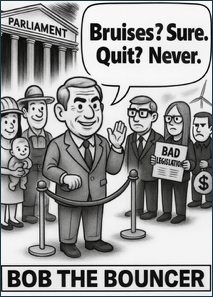
The key role of an independent or minor party member of parliament is that of a gatekeeper – ‘standing guard at the gate’ to prevent bad laws getting into the Parliament – someone who will ‘sound the alarm’ when dodgy legislation is presented to the parliament.

If Parliament House were a night club, they’d have a bouncer on the door only admitting those who would add value! Undesirables would be turned away.

As a former Senator, I know how to stand up to destructive policies and how to stop laws that drive up costs, disrupt society and make life harder for everyday Australians.

Walk …. Get Fit …. Go Letterboxing ….!

As we often say, it’s one thing to have an opinion – it’s a very different thing to support a cause.

With summer approaching, what better time to get fit, go for a walk …. and do some letterboxing!

Can you do some letterboxing in your area? As few or as many letterboxes as you like would be just fine.

Note: Political material is not junk mail. It is defined and protected by legislation as political communication.

If you would like to do some letterboxing, please let us know here (choosing ‘Admin’ as the recipient).

Thank you for your support.

Filed Under: South Australia Election 2026, Australia's economic future, Australian Character, Australian Politics, Climate Change, Defence, Family Policy, Family Resilience, Freedom, Housing Affordability, Israel, Renewable energy, Social policy, South Australia

  • Page 1
  • Page 2
  • Page 3
  • Interim pages omitted …
  • Page 8
  • Go to Next Page »

Primary Sidebar

  • Facebook
  • Instagram
  • LinkedIn
  • Twitter

Bob Day AO, Federal Director Profile

Bob-Day-AO

Profile is here.

Subscribe to our Mailing list!

* indicates required


Recent Posts

  • AI and the (St) Peter Principle – Part 2
  • AI and the (St) Peter Principle – Part 1
  • Army of One
  • Stork in the Road
  • Remembering Al Capone
  • State Dogged by Political Circus
  • Seven Voices, One Clear Choice
  • Soccer, Sin and a State Election
  • Aussie Osborne – AUKUS 2026 Part 2
  • Aussie Osborne – AUKUS 2026 Part 1
  • Cult Fiction
  • The State vs the People
  • ‘Quis custodiet ipsos custodes?’
  • Which is Witch in ’26?

© 2026 The Australian Family Party
Privacy Policy
Contact Us
Authorised by Bob Day, Australian Family Party, 22 Grenfell Street, Adelaide SA 5000